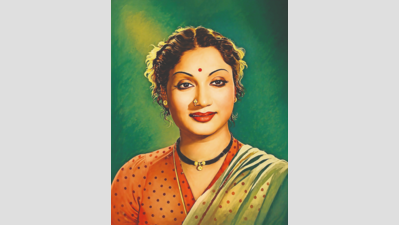
She didn’t follow scripts—she rewrote them. G Varalakshmi wasn’t just another face in the crowd of Tamil cinema’s golden era; she was a storm in a saree, a firebrand presence who refused to be tamed by the moral policing of 1950s Indian cinema. While heroines were expected to embody purity, grace, and quiet sacrifice, G Varalakshmi played the rowdy—the defiant, sharp-tongued, physically assertive woman who wasn’t afraid to throw a punch or outsmart the men around her.
And in doing so, she didn’t just steal scenes—she changed how female power could be portrayed on screen.
The Birth of a Rebel: G Varalakshmi’s Early Life and Entry into Film
Born in the early 1930s in Tamil Nadu, G Varalakshmi’s upbringing was far from the sheltered world expected of women of her time. Her family background—marked by financial instability and social upheaval—meant she had to navigate life on her own terms from a young age. This independence translated into her art.
She entered the film industry not through the traditional route of beauty contests or familial connections, but through sheer force of personality. Her debut wasn’t with a soft-spoken romantic lead role but with a fiery supporting character in a social drama that challenged caste and class hierarchies. Directors noticed her not for her looks, but for her voice—the way she delivered dialogue with a guttural intensity that cut through the background score.
"She didn’t perform anger. She was anger. And that made her real," recalled veteran cinematographer A. Vincent in a 1992 interview.
Her early roles were often labeled “negative” by critics, but audiences saw something different: authenticity. In a film landscape where women were reduced to symbols of virtue or victimhood, G Varalakshmi played women with agency, even when that agency was expressed through violence or rebellion.
Redefining the “Rowdy” Trope: What Made Her Different
The term “rowdy actress” isn’t typically one of honor in Indian cinema. It’s often reserved for actresses typecast as loud, garish, or morally loose—characters designed to be shunned by the protagonist and punished by the narrative. But G Varalakshmi turned that trope on its head.
Her characters weren’t merely disruptive; they were contextually justified. She played women who fought back against sexual harassment, who protected their families from landlord exploitation, who refused dowry demands by force when negotiation failed. In Naan Petra Selai (1957), she delivered one of Tamil cinema’s first on-screen takedowns of a male antagonist—kicking him down a flight of stairs after he tried to assault her sister. The scene wasn’t stylized. It was brutal. It was real.
She didn’t rely on dance numbers or melodramatic crying sequences. Her power was in control—of her body, her voice, her timing.
Common mistakes in portraying “strong women” that G Varalakshmi avoided: - Over-sexualization for “rebel” effect - Redemption arcs that diluted her agency - Being sidelined after the first act - Lack of psychological motivation for her actions
G Varalakshmi’s characters had backstories. They had pain. They had strategy.
Breaking Gender Norms in 1950s Tamil Cinema
Indian cinema in the 1950s was a battlefield of ideologies. Nehruvian modernism clashed with orthodox traditions. Films were expected to promote national unity, often at the cost of individual complexity—especially for female characters, who were either goddesses or temptresses.
G Varalakshmi refused both boxes.
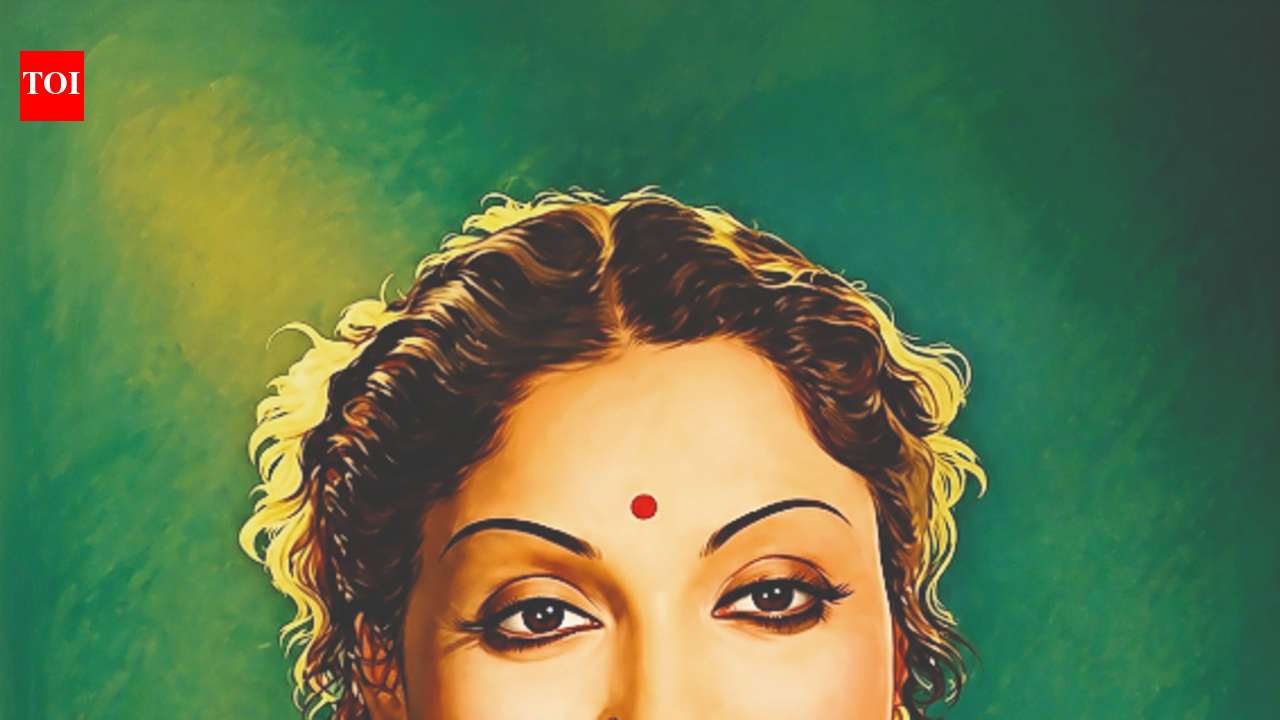
She appeared in over 40 films between 1953 and 1965, many of them in lead or co-lead roles. In Thaai Magal (1959), she played a single mother who opens a roadside eatery and fights off loan sharks using nothing but a rolling pin and her wits. The film didn’t end with her finding love. It ended with her standing atop her shop, waving a flag—literally claiming space in a male-dominated world.
This was radical.
Even today, mainstream Indian cinema struggles to depict women who aren’t ultimately validated through marriage or motherhood. G Varalakshmi’s characters were validated through action, not approval.
Realistic use case in storytelling: Modern screenwriters can study her filmography to understand how to write female characters whose strength isn’t performative but structural—women whose power emerges from their environment, not just their personality.
The Price of Defiance: Backlash and Fading Fame For every fan who called her “the people’s heroine,” there was a critic who labeled her “vulgar” or “unfeminine.” The press mocked her style—her preference for short hair, minimal makeup, and practical clothing. Male co-stars reportedly avoided sharing romantic scenes with her, fearing their masculinity would be overshadowed.
By the late 1960s, the industry shifted. The rise of romantic heroines like Savitri and Padmini pushed rugged, socially charged dramas to the margins. G Varalakshmi’s brand of rowdiness no longer fit the mold.
She didn’t retire quietly. She fought for roles, wrote scripts, even directed a short film in 1971—Pennin Perumai—which criticized dowry practices and was banned in three states for being “too provocative.”
Eventually, she stepped away from films, choosing to teach acting in rural Tamil Nadu. No grand farewell. No national award. Just silence.
Why G Varalakshmi Still Matters Today
In an age of curated feminist messaging in cinema, G Varalakshmi stands as a reminder that rebellion doesn’t need a hashtag to be valid.
Modern actresses like Samantha Ruth Prabhu in The Family Man 2 or Nayanthara in Netrikann channel a similar energy—women who fight without apology—but their characters are often polished, photogenic, and digitally enhanced. G Varalakshmi’s power came from her imperfection. Her sweat. Her visible scars.
She also highlights a key limitation in today’s feminist storytelling: the need for redemption. Contemporary strong female leads are often given trauma backstories that justify their strength, as if women can’t be powerful unless they’ve suffered enough to earn it. G Varalakshmi’s characters weren’t victims first—they were fighters by choice.
Workflow tip for content creators: When writing about female empowerment, ask: Is this character strong because she endured, or because she decided? G Varalakshmi chose strength. That’s her legacy.
Stealing the Show: Iconic Performances That Defined Her Career
Some roles cemented her status not just as an actress, but as a cultural disruptor.
- Naan Petra Selai (1957): Her takedown of a corrupt police officer made her a folk hero in rural theaters. Audiences cheered when she slapped him.
- Thaai Magal (1959): A rare film where the protagonist doesn’t marry or die. She wins.
- Kalam Vellum (1960): Played a female gang leader in Madras’ underworld. Based on real events.
- Pennin Pesu (1963): Broke taboos by portraying a woman filing for divorce in a conservative society.
- Oru Thalai Ragam (1965): Her final lead role—a war widow who joins the resistance. The film was pulled from theaters after one week for “inciting unrest.”

Each role was a middle finger to convention.
The Legacy: Influence on Modern Indian Cinema
You can see her shadow in the defiant glint of Sridevi in Jaya Janaki Nayaka, in the physicality of Tabu in Haider, in the unapologetic rage of Bhumi Pednekar in Saand Ki Aankh.
But her true legacy is in independent cinema. Filmmakers like Leena Manimekalai and Ramkumar Balakrishnan cite her as a key influence—someone who proved that Tamil women could dominate narratives without becoming caricatures.
Her refusal to conform also paved the way for more complex casting. Today, actresses like Keerthy Suresh and Aishwarya Rajesh take on roles with moral ambiguity, emotional volatility, and physical dominance—roles that would have been unthinkable without pioneers like G Varalakshmi.
Reclaiming the Narrative: Why We Need to Remember Her
She wasn’t perfect. Some of her films relied on caste-coded villains or reinforced regional stereotypes. But her intent was clear: to give voice to the voiceless, especially women who lived on the margins.
In a world where “strong female character” has become a marketing slogan, G Varalakshmi reminds us that real strength doesn’t come from flawless delivery or viral monologues. It comes from showing up, speaking loud, and refusing to leave—even when the script says you should.
She stole the show not because she was the loudest, but because she was the truest.
If you’re creating content about rebellion, about female rage, about the cost of defiance—start with her filmography. Watch how she moves, how she pauses before striking, how she lets silence do the work of ten dialogues.
Then ask yourself: Am I writing courage, or am I writing compliance in bold font?
G Varalakshmi didn’t just defy convention. She burned it down. And from those ashes, a new kind of heroine was born.
FAQ
Who is G Varalakshmi? G Varalakshmi was a Tamil actress active from the 1950s to 1960s, known for playing bold, rebellious female roles that challenged social norms and gender expectations in Indian cinema.
Why is G Varalakshmi called the "rowdy actress"? She earned the title due to her frequent portrayal of strong, aggressive, and defiant women—characters who used physical and verbal confrontation to fight injustice, often in male-dominated settings.
What are some of G Varalakshmi’s most famous films? Notable films include Naan Petra Selai, Thaai Magal, Kalam Vellum, Pennin Pesu, and Oru Thalai Ragam, all of which featured her in powerful, unconventional roles.
Did G Varalakshmi face backlash for her roles? Yes. Critics often labeled her performances as "vulgar" or "unfeminine," and several of her films were censored or banned for their radical themes, especially those addressing dowry, corruption, and female autonomy.
How did G Varalakshmi influence modern cinema? She paved the way for complex, non-stereotypical female characters in South Indian cinema, influencing later actresses and filmmakers who depict women with agency, moral ambiguity, and physical strength.
Is G Varalakshmi still active in the film industry? No. She stepped away from mainstream cinema in the late 1960s and later taught acting in rural Tamil Nadu. She passed away in the 1990s with little public recognition.
Where can I watch G Varalakshmi’s films today? Most of her films are not available on mainstream streaming platforms, but restored versions occasionally screen at Indian film festivals or through archives like the Tamil Film Archive in Chennai.
FAQ
What should you look for in G Varalakshmi: The Rowdy Actress Who Broke All Norms? Focus on relevance, practical value, and how well the solution matches real user intent.
Is G Varalakshmi: The Rowdy Actress Who Broke All Norms suitable for beginners? That depends on the workflow, but a clear step-by-step approach usually makes it easier to start.
How do you compare options around G Varalakshmi: The Rowdy Actress Who Broke All Norms? Compare features, trust signals, limitations, pricing, and ease of implementation.
What mistakes should you avoid? Avoid generic choices, weak validation, and decisions based only on marketing claims.
What is the next best step? Shortlist the most relevant options, validate them quickly, and refine from real-world results.